You know when you walk past a building and you wonder what it’s like inside, well St Ninian’s on Baxtergate fell into that category. Today though we had the chance to wander in and we are glad we did. We were met on entry by keen volunteers, one of whom was only too happy to provide a personal tour around the church.
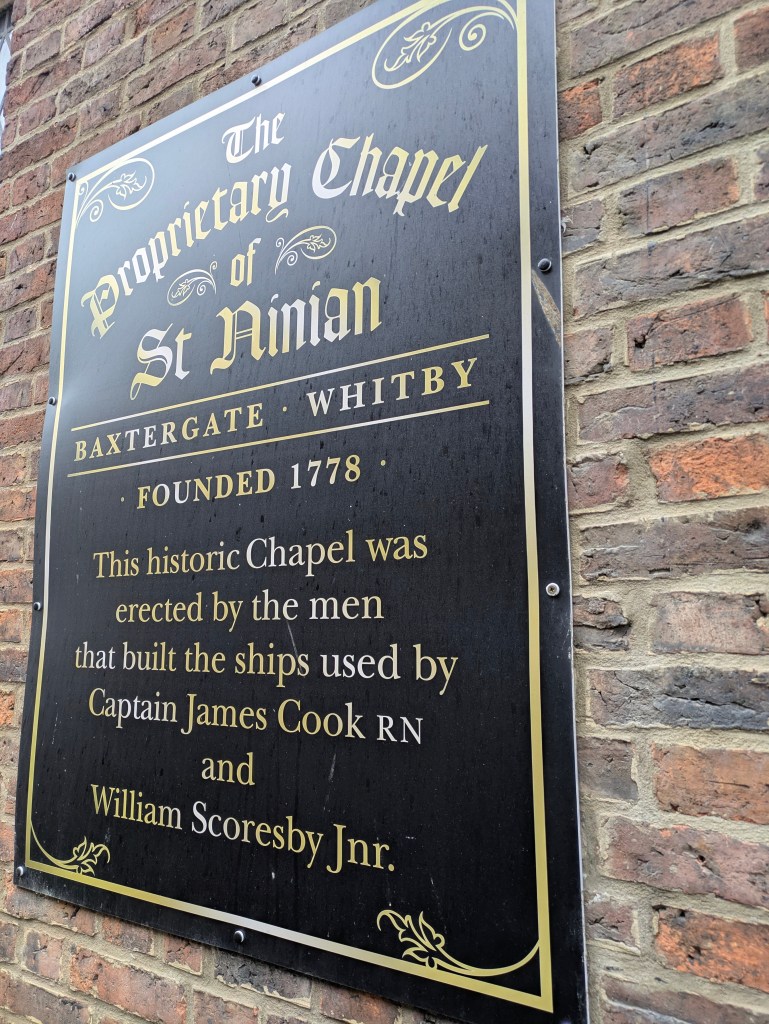
We were provided with lots of unique insights into the Chapel, its history and how it was established. I hope they don’t mind but I did take some liberties and took pictures of the information posted around the church – saves me writing it.
The following in italics comes from one such information leaflet:
================================================
A Brief History and Guide to St Ninian’s Church
Welcome to St Ninian’s
We are happy to be able to share our historic church, which stands as a bastion of the Catholic faith amid the day-to-day bustle of Baxtergate. We hope you will find much of interest as you walk around a church, which dates from the proud years when Whitby was the fifth port in the land had provided ships for Captain Cook’s voyages of discovery.
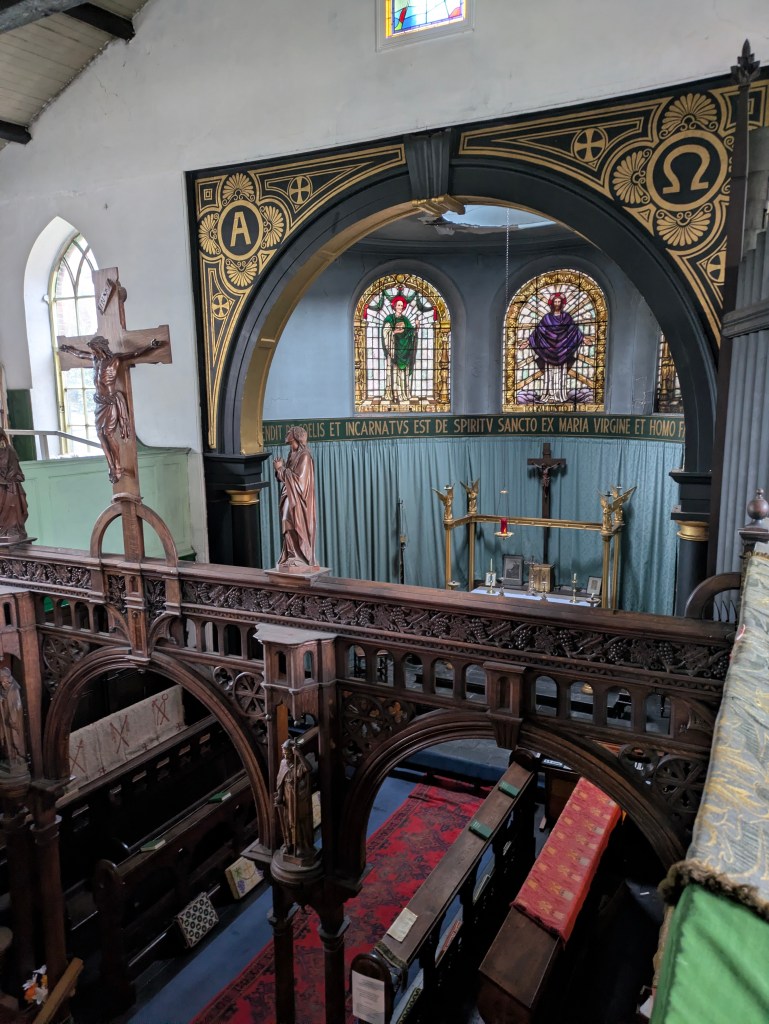
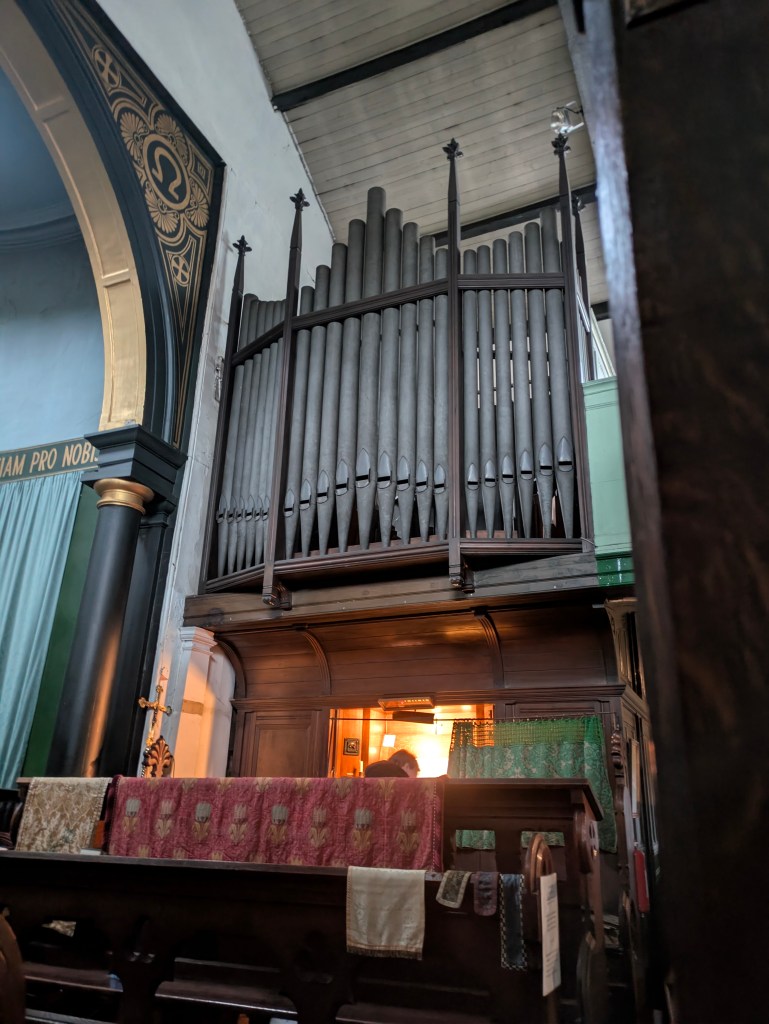
The timbers of the church came from the merchants who supplied the shipyards alongside the river Esk and the skills of the shipbuilders themselves were adapted for the creation of a building in which many of them worshipped. For more than two centuries now, successive generations have gladly and proudly ensured continuity of worship, prayer and praise in the church, which they regard as their spiritual house. As an Old Catholic parish served by the Order of St Benedict, St Ninian’s offers a traditional liturgy (in English) and a mission, which stands firmly in the Catholic faith of the undivided Church.
“Holy Mass is the centre of the life of St Ninian’s. The Holy Sacrifice of the Mass is offered daily. For Mass times and the times of other liturgical services please see the notice board outside and the bulletin in the porch.
We are delighted to share the joys and peace of our church with you and hope that you will enjoy your visit.
The people of St Ninian’s
After the Abbey of St Peter and St Hilda was refounded on the East Cliff in 1078 by Benedictine monks, they decided to found St Mary’s church close by on the cliff to serve the people who lived down in the harbour. It is, as you will have discovered, a very steep climb up the Church Stairs (199 steps) to St Mary’s. It is thought that some time in the middle ages, probably before the end of the 14th century, a chapel was built to be served by the monks near the bridge and dedicated to St Ninian a Northern monastic saint.
When the Abbey was dissolved in 1539, the parish church and the chapel remained for the use of the inhabitants of the growing town. However, by the middle of the 18th century, the chapel was no longer adequate for those who were too old or infirm to climb the Church Stairs. The chief citizens of the town tried very hard to persuade the diocese of York to build a new chapel to replace the old one which had become damp, liable to flooding and condemned as “injurious to health”
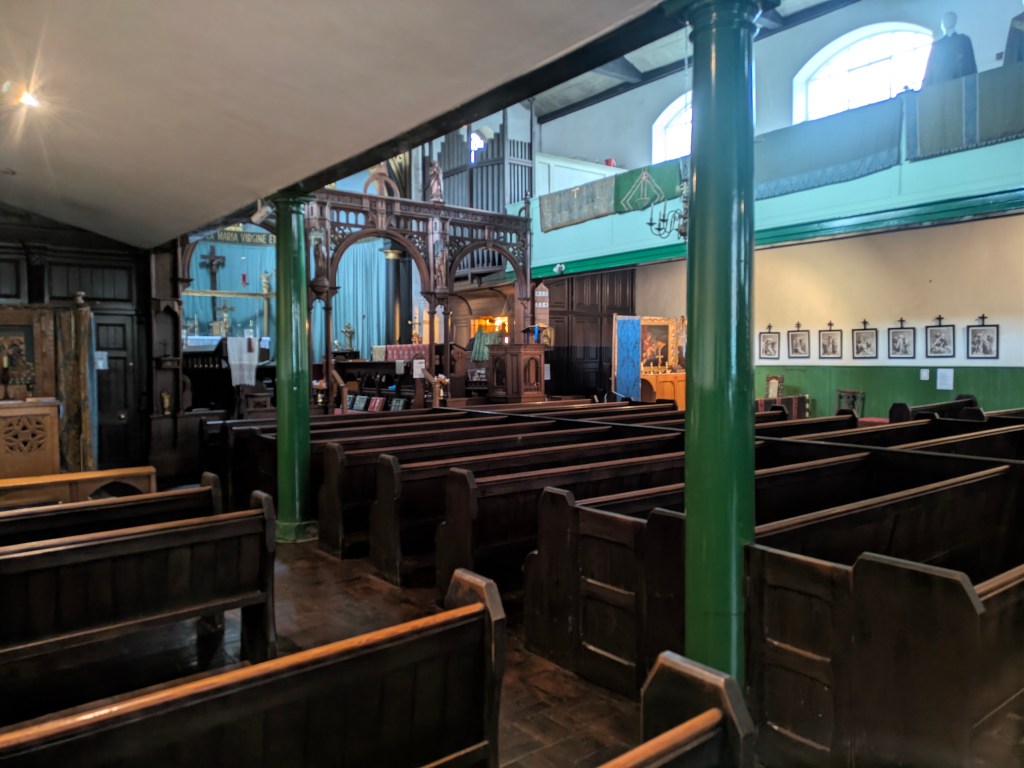
When their efforts failed, they tried a new plan. A group of thirty bought a plot of land in Baxtergate, and petitioned the Archbishop to allow them to build a chapel for themselves, to be served by a priest licensed by the Archbishop. Each put up the sum of £50, a lot of money in those days, and this would give them a one thirtieth share as a Proprietor. As a Proprietor they would have the exclusive use of a free pew in the chapel. The other pews would be let to provide the stipend for the priest, the wages for the clerk, bell ringer and the cleaner. Permission was given and building began in 1777, the chapel opening in 1778. A deed of trust was drawn up which laid down all of the rights and duties of the Proprietors. It was designed to be Archbishop-proof! After all, there was no point in the Proprietors building their chapel if the Archbishop could take it over. This became extremely important in the 1980’s when the diocese tried to close the church. This attempt at closure instigated St Ninian’s departure from the Church of England.
Ever since 1864 when a priest called Fr Richard Price was appointed by the Proprietors this church has been very much in the Catholic tradition. He came to Whitby full of zeal for the Oxford movement and it was he who gave the church its present character. His changes were not without anguish and the Archbishop was drawn into conflict, but the Oxford movement prevailed and now as a Catholic parish the faith and practice he introduced continues to this day.
The church is no longer owned by Proprietors but is a charitable trust, governed by a board of Trustees. As a church served by the Order of St Benedict (Benedictines) since 2000, in a very real sense St Ninian’s continues both our Catholic and monastic heritage.
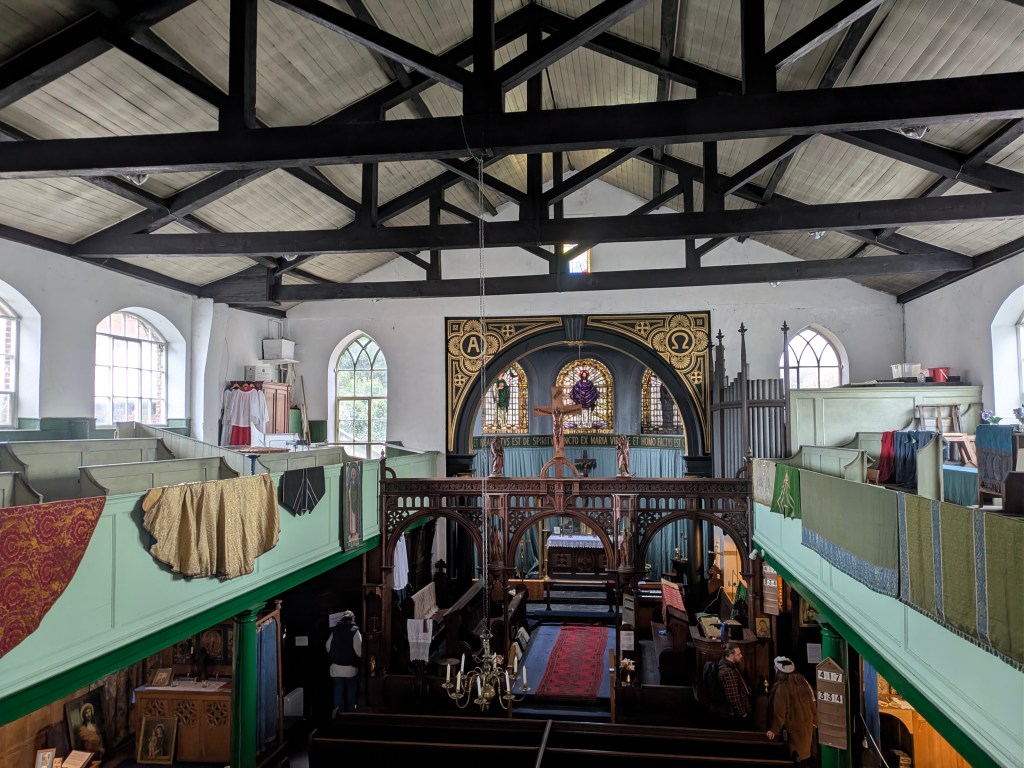
Some Unusual features
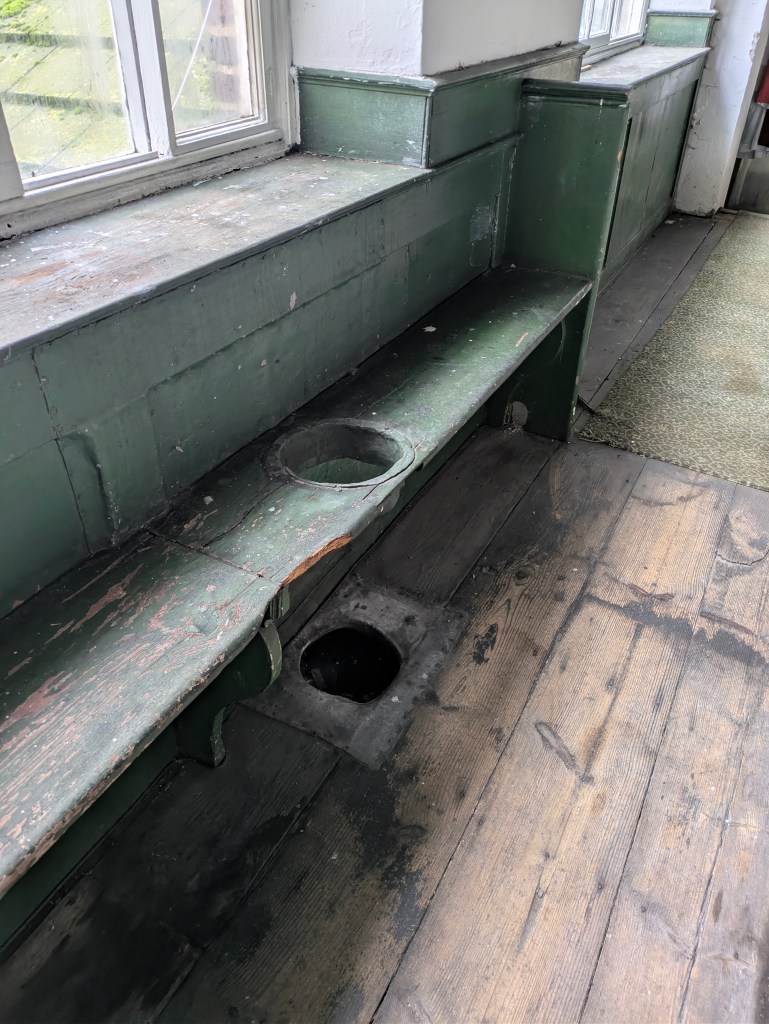
The personal tour did provide some unusual insights including toilets and bells. The toilets appear to have been an original feature. Hard to imagine using them, perhaps the layout of the balcony was slightly different when initially built. Either that or they were very comfortable “visiting the toilet” in full public view.
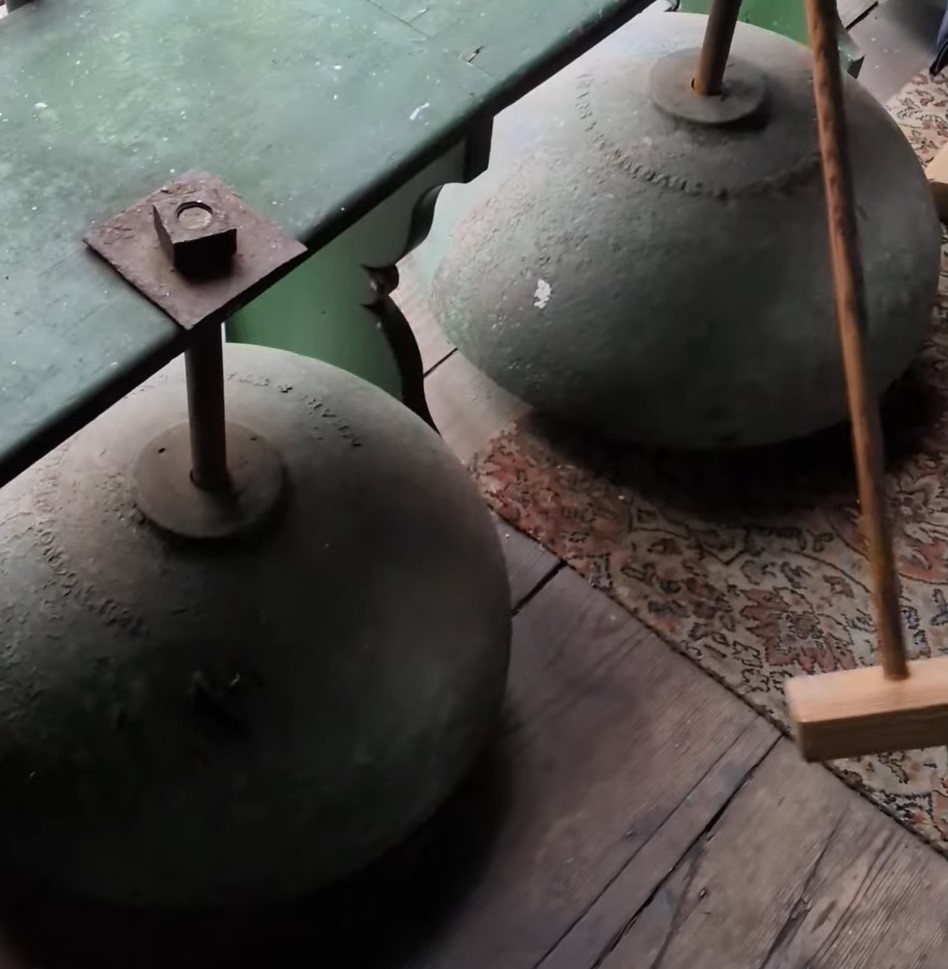
The bells were great, we even had a chance to ring them. I’m guessing they were used to call local people to prayer, no tall belfry here with the bells being located on the balcony floor. They were quite small so only “locals” would get to hear them I’m sure.
Have a look at Wikipedia for more details on St Ninian and for more on the church itself
The Gnome Man – Thomas Whittaker
In the church was an interesting area, an installation by the The Gnome Man. His work is of interest to us as his workshop is just in the valley below Low Quebec. No longer a carpentry workshop but still there to see for those with an interest.
Again the text below in italics was taken from information leaflets in the church.
THE LADY ALTAR – GIFTED BY THE HOLLINS FAMILY
MADE BY THOMAS WHITTAKER – GNOME MAN
Thomas Whittaker’s hand‑worked oak pieces are marked with a carved gnome on one of the corners – see the small arrow stickers. He chose this because an old Scandinavian legend believed that every time an acorn germinated, a gnome was born to act as the oak tree guardians.
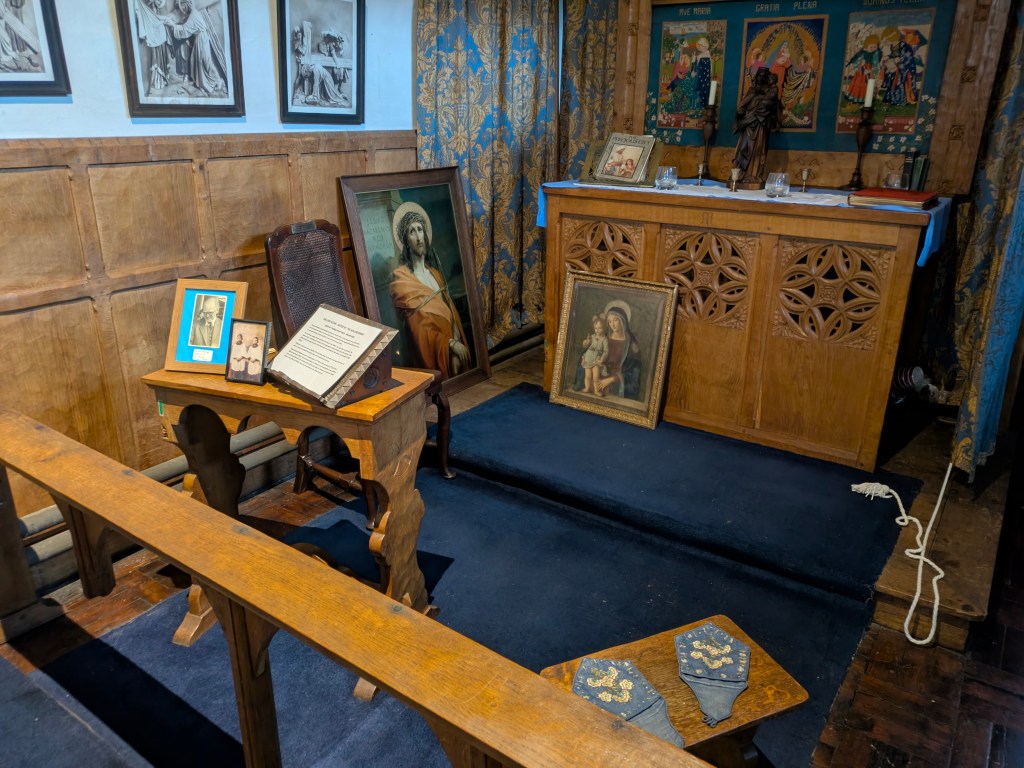
This set of altar, tables, rail and wall panel date back to the 1960’s. The Lady Altar was gifted by The Hollins Family, Proprietors and members of the congregation. Herbert Hollins made the tapestry. Edith Hollins played the piano in church. (This information was provided by Alan Barker, the Grandson of Edith Hollins.)
Whittaker’s trademark tool was the adze. The wavy adze marks can be seen on the tops of furniture. An adze is a sharp curve‑bladed tool used to shape and smooth wood surfaces.
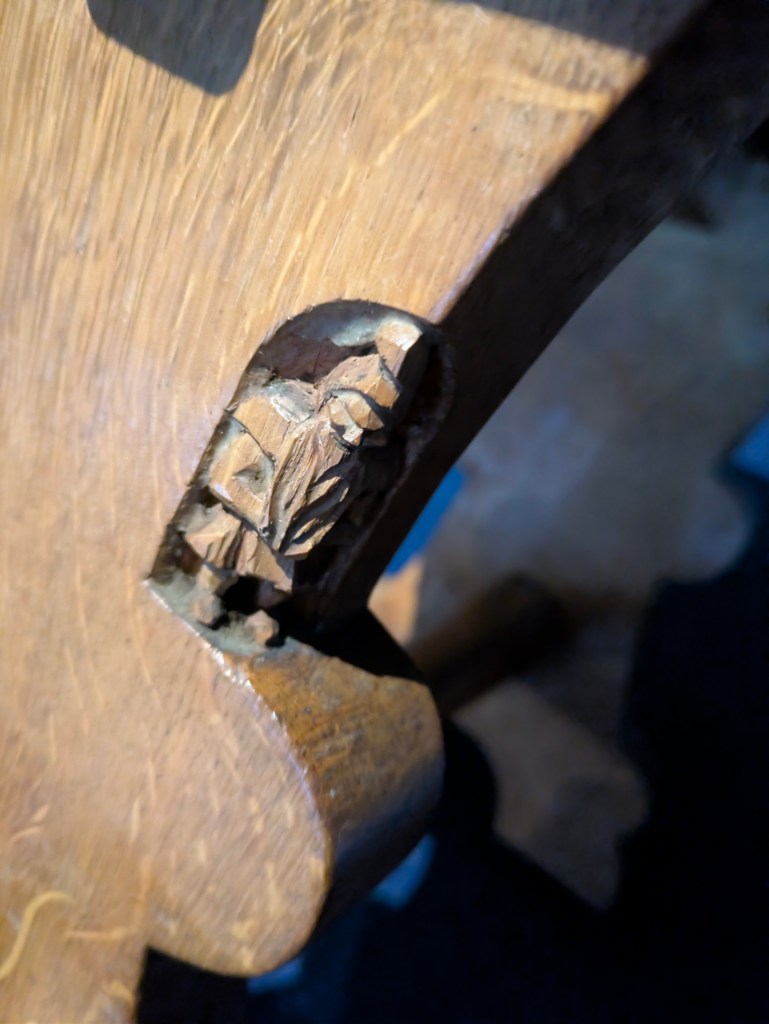
Thomas Ernest Whittaker was born in Scarborough on 31st March 1910 and died on 10th April 1991. In 1939 he was living in Fulford, York and was working as a Railway Coach Body Builder. He was advised to move to the coast because of his health and by 1944 he had settled in Littlebeck, a hamlet near Sleights and just a few miles from Whitby. He set up his workshop in the old Bay Horse Inn.

 Low Quebec
Leave a comment